Sumit chrono
8 months ago


“Macular dystrophy” is a family of conditions. The exact type shapes the outlook, the tests and the sensible support.
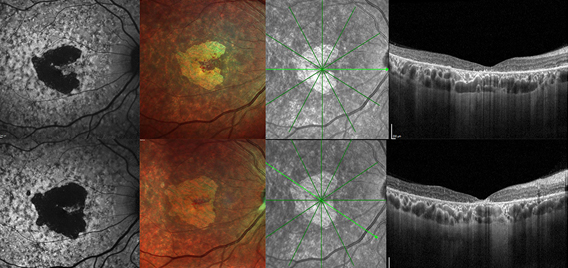
Best disease often begins in childhood and may leave vision good for years. Pattern dystrophies tend to appear in middle age and progress slowly. Cone-rod dystrophy affects colour and central vision along with side vision and can move faster.
Because the paths differ so much, being told you have “a dystrophy” is only the start. The type should be named in your report.
OCT shows the shape of the macular layers. Autofluorescence highlights pigment changes. Electrical tests measure how cones and rods respond to light. Gene testing may identify the cause and help relatives.
Repeating the same scans each year makes small changes visible that a single visit would miss.
Screen-heavy jobs are manageable with larger text, dark mode and voice tools. People who read Arabic script often find the dots and small marks the first casualties of central loss, so bigger, bolder fonts can help.
Name the type with scans and tests.
Magnifiers and electronic readers.
Fluid or new vessels in some types need prompt care.
For parents and siblings.
Compare scans over time.
Cover each eye and note changes.
No smoking, steady blood sugar.
Adjust screens and lighting.
Eye Stem Cell Center brings together pioneers in stem cell biotechnology and highly experienced ophthalmologists to provide advanced regenerative eye care with compassion and precision.
Dr. Pallavi is renowned for her expertise in cataract and corneal surgeries. With thousands of successful procedures, she combines surgical precision with a patient‑first approach.
Get ConsultationDr. Robin specializes in advanced cataract surgery, refractive procedures, and keratoconus treatment. His clinical excellence ensures patients receive world‑class eye care.
Get ConsultationDr. Pawan is an expert in retinal disorders, diabetic retinopathy, and advanced retina procedures. His patient‑focused approach ensures precise treatment and long‑term vision care.
Get ConsultationStargardt’s is the best-known inherited form in young people, while pattern dystrophy is common in adults.
Most are, though sometimes no relative is known to be affected.
Only if a complication such as abnormal vessel growth develops.
Total blindness is uncommon because side vision is usually kept.
Often once or twice a year, set by your specialist.
Evidence is limited. Ask before starting any high-dose product.