
Sumit chrono
7 months ago


Most people with ARMD have the dry form, which does not respond to injections. This page explains what can be done for dry ARMD today and how newer therapies for geographic atrophy fit in.
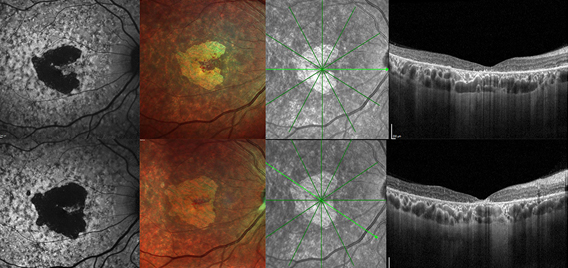
Dry ARMD develops as deposits called drusen build up and the retinal pigment layer slowly thins. It progresses over years, and many people keep useful reading vision for a long time.
The main risks are progression to wet ARMD and to geographic atrophy, an area of cell loss at the macula.
Simple habits plus regular scans.
What is available now.
Recommended for some people with intermediate disease, following AREDS2 research.
Fish, leafy greens and nuts are linked with slower progression.
Newer injections slow growth of atrophic areas in selected patients, with injection burden and cost to weigh.
Cell replacement for advanced dry ARMD remains investigational.
Habits that help.
Smoking worsens outcomes.
Bright task lighting and matte surfaces.
Before reading becomes difficult.
It may signal conversion to wet ARMD.
Eye Stem Cell Center brings together pioneers in stem cell biotechnology and highly experienced ophthalmologists to provide advanced regenerative eye care with compassion and precision.
Dr. Pallavi is renowned for her expertise in cataract and corneal surgeries. With thousands of successful procedures, she combines surgical precision with a patient‑first approach.
Get ConsultationDr. Robin specializes in advanced cataract surgery, refractive procedures, and keratoconus treatment. His clinical excellence ensures patients receive world‑class eye care.
Get ConsultationDr. Pawan is an expert in retinal disorders, diabetic retinopathy, and advanced retina procedures. His patient‑focused approach ensures precise treatment and long‑term vision care.
Get ConsultationNo, but progression can sometimes be slowed.
Only certain formulas studied in trials, and only for specific stages.
In a minority, which is why monitoring matters.



