
Sumit chrono
7 months ago


Macular dystrophies are rare and often unfamiliar to local clinics. This page explains how stem cell therapy is being studied and how to prepare for an informed discussion.
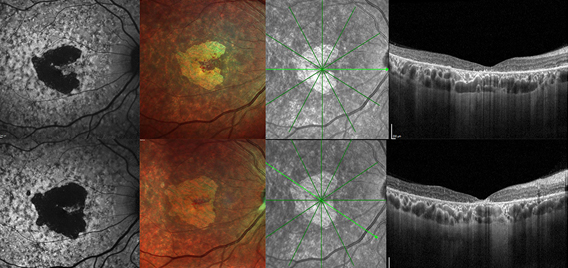
Best disease, pattern dystrophy, cone dystrophy and Stargardt’s are all macular dystrophies. Because each behaves differently, a clear name matters before any new therapy is considered.
Stem cell research here is exploratory. It focuses on replacing or nourishing macular cells, and early trials mainly include people whose retinal structure is still intact.
The right evidence guides the right question.
Described without promises.
Tested in specialised studies for replacing damaged cells.
Cells releasing growth factors are studied for slowing decline.
Earlier-stage disease is generally more suitable.
Not everyone will benefit and some may notice no change.
Useful whatever research brings.
Larger fonts and good lamps ease strain.
Complications such as fluid or abnormal vessels can be caught early.
Helps relatives understand their own risk.
Plan routes and use assistance in unfamiliar places.
A review is only as good as the information behind it, and macular dystrophies are easy to mislabel without the full picture.
Eye Stem Cell Center brings together pioneers in stem cell biotechnology and highly experienced ophthalmologists to provide advanced regenerative eye care with compassion and precision.
Dr. Pallavi is renowned for her expertise in cataract and corneal surgeries. With thousands of successful procedures, she combines surgical precision with a patient‑first approach.
Get ConsultationDr. Robin specializes in advanced cataract surgery, refractive procedures, and keratoconus treatment. His clinical excellence ensures patients receive world‑class eye care.
Get ConsultationDr. Pawan is an expert in retinal disorders, diabetic retinopathy, and advanced retina procedures. His patient‑focused approach ensures precise treatment and long‑term vision care.
Get ConsultationOnly specialist imaging and sometimes gene testing can tell.
No. It is investigational, and we explain this at the start.
Yes. Scans from any clinic in Nigeria can be reviewed remotely.



