
Sumit chrono
7 months ago


Families in Yemen often wait a long time for a clear diagnosis. This page explains Stargardt’s disease, how stem cell research approaches it, and how to take a first step from home.
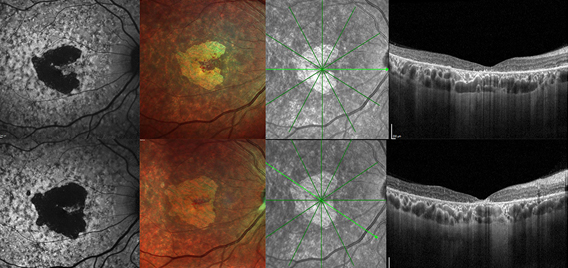
Stargardt’s damages the central retina and often begins in school-age children. In areas where specialist retina services are hard to reach, many families spend years without a firm diagnosis.
Stem cell research looks at replacing the retinal pigment epithelium that fails in this disease. It is still an investigational field, so careful review of your child’s scans comes before any suggestion of treatment.
You do not need to travel first. Existing reports can start the process.
Described honestly, without promising results.
Laboratory-grown RPE cells are tested in the central retina.
Some cells release substances that may slow photoreceptor loss.
People with surviving central retina tend to be better candidates.
If advised, we explain steps for visas, stay and follow-up.
Yemen’s strong sunlight makes eye protection important.
Reduce glare and UV exposure all year.
Do not take high-dose vitamin A unless a doctor advises it.
Large print and front-row seating help children keep learning.
Brothers and sisters can be checked early.
Eye Stem Cell Center brings together pioneers in stem cell biotechnology and highly experienced ophthalmologists to provide advanced regenerative eye care with compassion and precision.
Dr. Pallavi is renowned for her expertise in cataract and corneal surgeries. With thousands of successful procedures, she combines surgical precision with a patient‑first approach.
Get ConsultationDr. Robin specializes in advanced cataract surgery, refractive procedures, and keratoconus treatment. His clinical excellence ensures patients receive world‑class eye care.
Get ConsultationDr. Pawan is an expert in retinal disorders, diabetic retinopathy, and advanced retina procedures. His patient‑focused approach ensures precise treatment and long‑term vision care.
Get ConsultationNo. Stem cell treatment is still being researched, and results cannot be guaranteed.
Yes. Sending photographs of reports and scans allows us to give a first opinion.
It is inherited, usually when both parents carry a faulty gene, which is why relatives are sometimes affected.



