
Sumit chrono
7 months ago


Not every macular dystrophy starts in childhood. This page explains adult-onset forms that appear in the forties and fifties and how stem cell research relates to them.
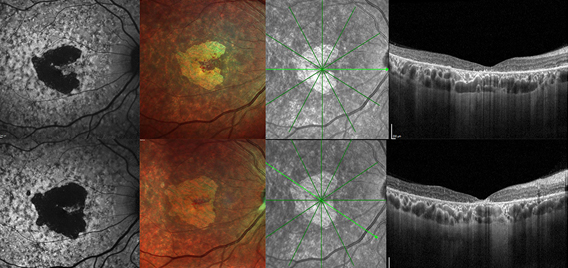
Adult-onset foveomacular vitelliform dystrophy and pattern dystrophies often start between 40 and 60. Because they cause central blurring at that age, they are easily mistaken for age-related macular degeneration.
The difference matters. These dystrophies are usually milder and slower, so any discussion of cell therapy has to begin with the right diagnosis and an honest view that many people need no treatment at all.
Findings that help separate the two.
Realistic and balanced.
The usual approach for mild forms.
Aimed mostly at severe, early-onset dystrophies.
Relevant only where a gene is known.
Few adult patients need or qualify for experimental treatment.
What you can do now.
Ask for the exact dystrophy name.
Needed to judge change.
Rarely, abnormal vessels develop and need treatment.
Some forms run in families.
Eye Stem Cell Center brings together pioneers in stem cell biotechnology and highly experienced ophthalmologists to provide advanced regenerative eye care with compassion and precision.
Dr. Pallavi is renowned for her expertise in cataract and corneal surgeries. With thousands of successful procedures, she combines surgical precision with a patient‑first approach.
Get ConsultationDr. Robin specializes in advanced cataract surgery, refractive procedures, and keratoconus treatment. His clinical excellence ensures patients receive world‑class eye care.
Get ConsultationDr. Pawan is an expert in retinal disorders, diabetic retinopathy, and advanced retina procedures. His patient‑focused approach ensures precise treatment and long‑term vision care.
Get ConsultationNo. It is inherited, often milder and not treated like ARMD.
Most people with adult-onset dystrophies do not need any treatment beyond monitoring.
Yes, a retina specialist can review them for you.



