Sumit chrono
8 months ago


The right step depends on the stage. Early disease calls for watching and prevention, while late disease may need injections or visual rehabilitation.
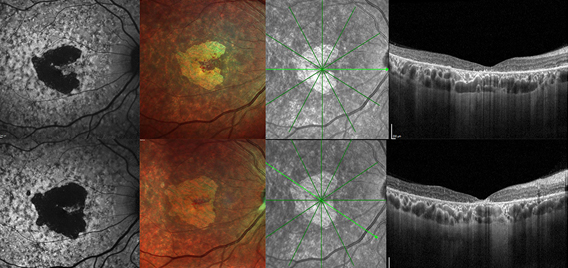
At the early stage, small drusen may cause no symptoms and are found on routine examination. At the intermediate stage, larger deposits increase the chance of progression. Late disease takes one of two forms: geographic atrophy, a spreading area of cell loss, or neovascular disease with leaking vessels.
Each stage has its own follow-up interval and its own treatment options.
Tobacco use, including shisha, raises risk substantially. Blood pressure, cholesterol and weight also matter, and so does time outdoors without eye protection. Family history cannot be changed, which makes the modifiable factors more important.
Eating leafy greens, fish and a variety of fruit and vegetables fits most diets and supports general eye health.
OCT scans reveal fluid and thinning long before sight changes. Autofluorescence maps areas of cell loss, and angiography may be used when a leaking vessel is suspected.
For early disease.
For selected intermediate cases.
For neovascular type.
Low-vision services for late stages.
Compare OCT over time.
Slows progression.
Dark text on light paper.
Tell family which signs need a call.
Eye Stem Cell Center brings together pioneers in stem cell biotechnology and highly experienced ophthalmologists to provide advanced regenerative eye care with compassion and precision.
Dr. Pallavi is renowned for her expertise in cataract and corneal surgeries. With thousands of successful procedures, she combines surgical precision with a patient‑first approach.
Get ConsultationDr. Robin specializes in advanced cataract surgery, refractive procedures, and keratoconus treatment. His clinical excellence ensures patients receive world‑class eye care.
Get ConsultationDr. Pawan is an expert in retinal disorders, diabetic retinopathy, and advanced retina procedures. His patient‑focused approach ensures precise treatment and long‑term vision care.
Get ConsultationUsually after fifty, with risk rising each decade.
Newer options exist in some countries. Ask your specialist what is available to you.
It may lower risk but cannot guarantee protection.
Yes, tobacco exposure of any kind is harmful.
Sudden distortion or a new dark patch. See a doctor quickly.
Genes contribute, but lifestyle plays a role too.