
Sumit chrono
8 months ago


Canada has many newcomers and many people who have changed provinces. Their eye history is often spread across several systems.
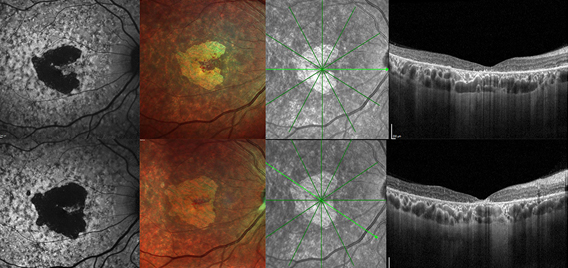
A diagnosis made in a hospital overseas, an OCT done at a private clinic, a genetic test sent through a research study: each one lives in a different place. Health systems do not automatically share eye images, so the patient often becomes the one who joins the dots.
Without a clear history, a research team cannot tell which dystrophy is present or how fast it is moving.
Ask each hospital or clinic’s records office for a copy of your chart. Under privacy rules you are entitled to your own health information, though a form and a processing period usually apply. Ask for the OCT images themselves, not just the printed report.
If a document is in another language, a short professional or doctor-supplied English summary of the key findings is often enough.
Which dystrophy you have, whether the damage is stable, whether any gene result exists and whether anything in the file rules you in or out of a study. Cell therapy for macular dystrophy remains experimental, so the aim is a realistic picture rather than a promise.
Best disease, pattern or cone-rod.
Compare scans across years.
Registries and eligibility.
Where proven care continues.
Digital copies in two places.
A simple timeline helps.
Not only paper summaries.
Including supplements.
Eye Stem Cell Center brings together pioneers in stem cell biotechnology and highly experienced ophthalmologists to provide advanced regenerative eye care with compassion and precision.
Dr. Pallavi is renowned for her expertise in cataract and corneal surgeries. With thousands of successful procedures, she combines surgical precision with a patient‑first approach.
Get ConsultationDr. Robin specializes in advanced cataract surgery, refractive procedures, and keratoconus treatment. His clinical excellence ensures patients receive world‑class eye care.
Get ConsultationDr. Pawan is an expert in retinal disorders, diabetic retinopathy, and advanced retina procedures. His patient‑focused approach ensures precise treatment and long‑term vision care.
Get ConsultationYes. Contact the hospital’s records department and ask for scans and letters.
Often, so collect from each place you were seen.
Usually as image files or on disc.
Almost always, though a gene result is not always found.
Possibly, if your last ones are old.
Not as standard care.



