
Sumit chrono
7 months ago


Stargardt's disease is the most common inherited macular dystrophy, and it mainly affects central vision, usually from childhood or the teenage years. This page explains how it is confirmed, what you can do now, and which treatments are being researched.
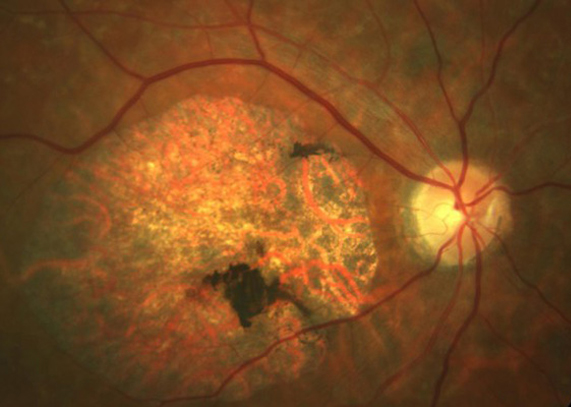
Stargardt's disease is an inherited eye condition in which the macula, the central part of the retina used for reading, recognising faces and seeing detail, gradually loses function. In most people it is caused by changes in the ABCA4 gene, which leads to a build-up of waste material in the retina's supporting cells and, over time, damage to the light-sensing cells above them.
It is different from retinitis pigmentosa. Retinitis pigmentosa usually begins with night blindness and shrinking side vision, while Stargardt's disease usually begins with blurred or patchy central vision and often leaves side vision intact. Knowing which condition you have decides what advice applies.
The pattern differs between people, even within one family.
A retina specialist usually combines several tests.
No treatment for Stargardt's disease has been approved yet, but these steps are widely recommended.
Quality sunglasses and a brimmed hat are commonly advised for outdoor use. This is a precaution, not a proven way to stop progression.
Unlike in some forms of retinitis pigmentosa, high-dose vitamin A is generally not recommended in Stargardt's disease. Check with your retina specialist before taking any supplement.
Magnifiers, electronic reading aids and training make school, work and daily tasks easier.
Rarely, abnormal vessels grow under the macula and can be treated. Report sudden distortion to your specialist straight away.
Several approaches are in clinical trials, and none is approved yet.
Approaches to deliver a working ABCA4 gene are in early trials, with size of the gene one of the main technical challenges.
Drugs designed to reduce the build-up of toxic vitamin A by-products in the retina are being tested in later-phase trials.
Replacing damaged retinal pigment epithelium cells is under early-phase study, and is covered on our stem cell pages.
Your retina specialist can check whether any study fits your gene change and stage.
Good support protects independence and education.
Magnifiers, large-print material, high-contrast settings and screen readers.
Accessible materials, extra time and seating can make a real difference.
Explains inheritance, usually recessive, and risk for family members.
Tracks change over time and keeps you informed about new trials.
Eye Stem Cell Center brings together pioneers in stem cell biotechnology and highly experienced ophthalmologists to provide advanced regenerative eye care with compassion and precision.
Dr. Pallavi is renowned for her expertise in cataract and corneal surgeries. With thousands of successful procedures, she combines surgical precision with a patient‑first approach.
Get ConsultationDr. Robin specializes in advanced cataract surgery, refractive procedures, and keratoconus treatment. His clinical excellence ensures patients receive world‑class eye care.
Get ConsultationDr. Pawan is an expert in retinal disorders, diabetic retinopathy, and advanced retina procedures. His patient‑focused approach ensures precise treatment and long‑term vision care.
Get ConsultationNot yet. No treatment is approved to cure or stop Stargardt's disease. Care focuses on protecting the retina, supporting vision and following legitimate research.
Stargardt's disease mainly affects central vision. Most people keep their side vision, so total blindness is not typical, although central vision loss can be significant.
No. They are both inherited retinal diseases, but Stargardt's affects the macula and central vision first, while retinitis pigmentosa affects night and side vision first.
Evidence is limited. High-dose vitamin A is generally not advised, so speak to your retina specialist before taking supplements.


