Sumit chrono
7 months ago


Macular dystrophy is a family of inherited conditions rather than a single disease. Knowing which type you have shapes monitoring, genetic advice and expectations.
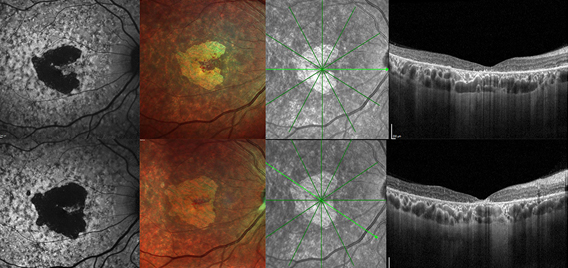
Best disease, pattern dystrophy and other forms can look alike at first glance but behave differently. Some progress slowly over decades, while others cause earlier central loss.
Specialists rely on retinal photographs, OCT, autofluorescence and sometimes an electrical test of the retina, along with family history, to separate them.
Periodic scans track the central retina.
Some types can develop fluid or abnormal vessels that need prompt treatment.
Magnifiers and digital aids help daily tasks.
Genetic counselling helps relatives understand their own risk.
Training helps patients look slightly off-centre.
Dark pens on white paper and bold fonts help.
Orientation tips make busy streets safer.
Adjusting screens and tasks can keep people employed.
Eye Stem Cell Center brings together pioneers in stem cell biotechnology and highly experienced ophthalmologists to provide advanced regenerative eye care with compassion and precision.
Dr. Pallavi is renowned for her expertise in cataract and corneal surgeries. With thousands of successful procedures, she combines surgical precision with a patient‑first approach.
Get ConsultationDr. Robin specializes in advanced cataract surgery, refractive procedures, and keratoconus treatment. His clinical excellence ensures patients receive world‑class eye care.
Get ConsultationDr. Pawan is an expert in retinal disorders, diabetic retinopathy, and advanced retina procedures. His patient‑focused approach ensures precise treatment and long‑term vision care.
Get ConsultationMost are, so asking about relatives is part of the work-up.
Yes, but dystrophies usually begin earlier in life than age-related disease.
Usually not. Eye imaging answers most questions.