
Sumit chrono
7 months ago


Macular dystrophy is a group of inherited conditions that damage the central part of the retina and blur sharp, detailed vision. This page explains the main types, how they are confirmed, and every treatment and support option with real evidence behind it.
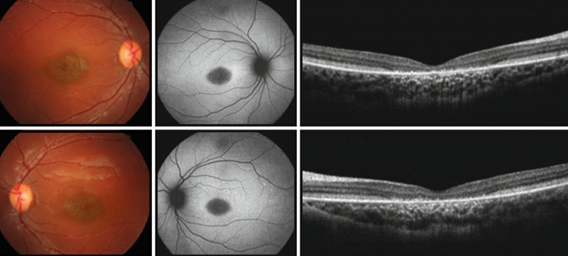
The macula is the small central area of the retina that lets you read, recognise faces, drive and see fine detail. In macular dystrophy, a faulty gene causes the macula to gradually lose function, usually in both eyes and often starting earlier in life than age-related macular degeneration.
Side vision is usually preserved, so most people keep the ability to move around independently. The speed of change, the age it begins and the best management all depend on the exact type, which is why a precise diagnosis matters.
Each type has its own gene, age of onset and pattern.
No single test is enough. A retina specialist usually combines several.
No treatment can cure macular dystrophy, but these steps protect vision and quality of life.
Abnormal blood vessels can sometimes grow under the macula. Anti-VEGF injections can treat this, and sudden distortion should be reported straight away.
Magnifiers, electronic reading aids and training help with study, work and daily tasks.
Not smoking and wearing good sunglasses are sensible precautions, though they are not proven to stop progression.
Supplements are not proven for most macular dystrophies, and some, such as high-dose vitamin A, are not advised in Stargardt's disease. Ask your specialist first.
Good support helps you keep independence, education and work.
Magnifiers, large-print materials, high-contrast settings and screen readers.
Accessible materials, extra time and good lighting.
Explains the inheritance pattern and risk for family members.
Catches treatable complications early and keeps you informed about new trials.
Eye Stem Cell Center brings together pioneers in stem cell biotechnology and highly experienced ophthalmologists to provide advanced regenerative eye care with compassion and precision.
Dr. Pallavi is renowned for her expertise in cataract and corneal surgeries. With thousands of successful procedures, she combines surgical precision with a patient‑first approach.
Get ConsultationDr. Robin specializes in advanced cataract surgery, refractive procedures, and keratoconus treatment. His clinical excellence ensures patients receive world‑class eye care.
Get ConsultationDr. Pawan is an expert in retinal disorders, diabetic retinopathy, and advanced retina procedures. His patient‑focused approach ensures precise treatment and long‑term vision care.
Get ConsultationNot at present. Most care focuses on treating complications, supporting vision and following legitimate research.
Macular dystrophy is inherited and often starts earlier in life, while age-related macular degeneration usually develops later and is linked to age and other risk factors.
It mainly affects central vision. Most people keep their side vision, though central vision loss can be significant.
It is strongly recommended. It confirms the type, guides advice and helps match you to clinical trials.



