Have any question? Call Us Now?

Stem Cell Treatment for Retinitis Pigmentosa: Answers to the Questions Patients Ask - Eye Stem Cell Center
October 17, 2026/ 0 comment
Stem Cell Treatment for Retinitis Pigmentosa: Answers to the Questions Patients Ask
Last updated: 17 October 2026 | Author: Prashant Tyagi (Stem Cell Biotechnology Specialist, 10+ years) and Dr. Pallavee Senior Consultant | Ophthalmologist & Eye Surgeon 22+ Years Experience
Stem cell treatment for retinitis pigmentosa is one of the most searched questions among families living with inherited vision loss. The honest short answer is that it is being studied, it is not an approved routine treatment, and no stem cell approach has yet been proven to restore vision. This article answers the questions patients ask most often so you can decide with clear facts.
Quick Navigation
- The Short Answer
- What Types of Stem Cells Are Being Studied?
- Established Care vs Investigational Treatment
- What Does the Evidence Show?
- Who Might Be Considered for Research?
- How Stem Cell Treatment Is Regulated in India
- Safety Around the Eye
- How to Choose a Provider
- Frequently asked questions
The Short Answer
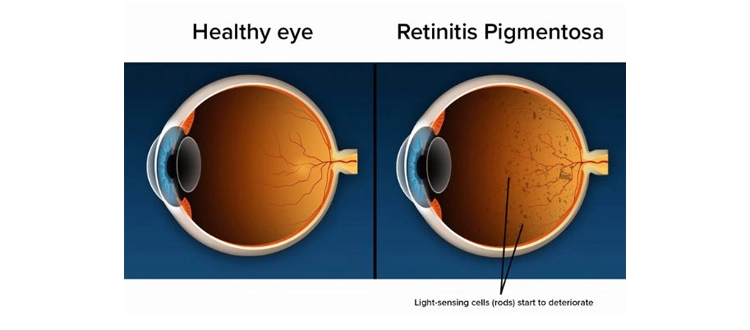
Retinitis pigmentosa (RP) is an inherited retinal disease in which light-sensing cells gradually degenerate. Stem cell approaches aim to protect remaining cells or replace damaged ones. Research is active, but results so far are early and mixed. Learn more about the condition on our page on retinitis pigmentosa.
What Types of Stem Cells Are Being Studied?
- Retinal pigment epithelium (RPE) cells grown from stem cells, aimed at replacing supportive retinal tissue
- Mesenchymal stem cells that may release protective factors and reduce inflammation
- Bone marrow-derived cells studied for their supportive effects
- Photoreceptor precursor cells, still largely at laboratory stage
Different studies use different cells, doses and delivery routes, which is one reason results cannot be compared easily.
Established Care vs Investigational Treatment
| Category | Status | What it involves |
|---|---|---|
| Diagnosis, ERG, imaging and genetic testing | Standard of care | Retinal imaging, visual fields, genetic counselling |
| Cataract surgery, treatment of macular swelling, low vision rehabilitation | Standard of care | Regular follow-up with a retina specialist |
| Gene therapy for RPE65-related disease | Approved in some countries; confirm availability in India | Needs genetic confirmation |
| Stem cell treatment for retinitis pigmentosa | Investigational. Permitted only within approved clinical research | Research on replacing or protecting retinal cells |
What Does the Evidence Show?
Published studies are mostly small, many have no control group, and benefits reported are modest and variable. Vision tests can also fluctuate naturally in RP, so improvements are hard to interpret without a comparison group. This is why a reliable success rate does not exist, and why you should be cautious about any provider who quotes one.
Who Might Be Considered for Research?
Eligibility depends on the specific study. Trials often look at your gene type, stage of disease, age and overall eye health. Your retina specialist can tell you whether a registered trial fits you. Related conditions such as Stargardt’s or macular dystrophy, rod and cone dystrophy and Usher syndrome have their own research pathways.
How Stem Cell Treatment Is Regulated in India
The National Guidelines for Stem Cell Research, 2017 issued by ICMR and the Department of Biotechnology state that any use of stem cells in patients, other than hematopoietic stem cell reconstitution for approved indications, is investigational. In September 2026 the Union Ministry of Health and Family Welfare also issued an advisory on regulation of stem cell therapy reiterating that routine clinical use is limited to officially approved indications.
- Ethics approval: investigational use needs ethics committee and institutional stem cell research committee oversight.
- CDSCO: stem cell-derived products are treated as new drugs, and clinical trials need permission.
- Registration: check any trial on the Clinical Trials Registry – India (CTRI).
- NMC: doctors are expected to avoid advertising unproven treatments as established therapy.
Rules are updated from time to time, so confirm the current position with the official sources listed at the end of this article.
Safety Around the Eye
Procedures involving the eye or optic nerve can cause infection, bleeding, raised eye pressure, retinal detachment and, in the worst cases, permanent loss of remaining vision. Serious harm has been reported after unregulated stem cell injections into the eye. Only agree to a procedure that is part of an approved protocol, performed by a qualified eye surgeon, with ethics committee approval and written informed consent. Always keep your own eye specialist informed, and do not stop current treatment on your own.
Cost Considerations
Costs in India are generally lower than in the USA, UK or Europe, but there is no single price. They depend on the condition, the protocol and cell source, the tests required, the number of sessions, hospital stay, and accommodation and travel. Ask for a written, itemised estimate stating what is included, and avoid large advance payments without documents.
How to Choose a Provider
- Ask which approved indication or registered trial covers your exact diagnosis, and verify it on CTRI.
- Confirm the treating doctors are registered ophthalmologists or retina specialists.
- Ask about cell source, laboratory standards and quality control.
- Be cautious of promises of restored vision, “cure” claims or quoted success percentages.
- Insist on informed consent documents and a written cost estimate.
- Ask for published data, not only testimonials.
Frequently Asked Questions
Is stem cell treatment for retinitis pigmentosa approved in India?
Not as routine treatment. It is investigational and permitted only within approved, registered clinical research.
Can stem cells restore my vision?
There is no reliable evidence of this. Be cautious of promises of restored vision.
Does stem cell treatment stop RP progression?
This has not been proven. Studies are ongoing.
Which route is used to deliver the cells?
It depends on the protocol. Any route near the eye carries risk and should be done only within an approved study by a qualified eye surgeon.
Should I stop my current care?
No. Continue regular follow-up with your retina specialist.
Final Word
Stem cell research in retinitis pigmentosa is promising but unproven. The safest path is accurate diagnosis, genetic testing, regular monitoring and careful verification of any trial. Keep your own retina specialist informed.
You can read about retinitis pigmentosa treatment in India, stem cell treatment in India and stem cell therapy in India, or upload your reports and contact our team for a discussion of your options.
More Official Sources
- Central Drugs Standard Control Organisation (CDSCO)
- National Medical Commission (NMC)
- Indian Council of Medical Research (ICMR)
- Overview of the National Guidelines for Stem Cell Research 2017 (PubMed Central)
- National Eye Institute (NEI)
- Foundation Fighting Blindness
Related Readings
- Retinitis Pigmentosa – condition overview
- Retinitis Pigmentosa Treatment in India – care and options in India
- Usher Syndrome Induced RP – when hearing loss and RP occur together
- Stem Cell Treatment for Eye Disease – which conditions are being studied
- Stem Cell Treatment for Stargardt’s Disease in India – a related macular dystrophy
