Sumit chrono
7 months ago


This page explains why researchers are exploring stem cell therapy for Stargardt's disease, how the approaches work, what early trials have reported, and what hurdles remain.
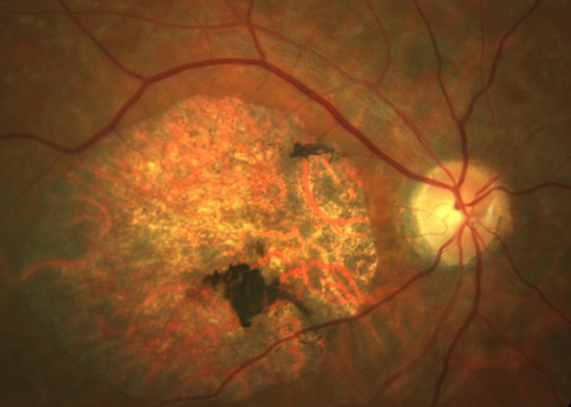
In Stargardt's disease, faulty ABCA4 function lets waste material build up in the retinal pigment epithelium (RPE), the layer that feeds and cleans the photoreceptors. When RPE cells fail, the photoreceptors above them in the macula are lost.
Stem cell therapy tries to supply healthy RPE cells to take over this support role and, in principle, protect the remaining photoreceptors. Because the problem starts in a single, well-defined layer, Stargardt's disease is considered a more suitable target than many other retinal diseases.
Four strategies are being explored.
Early, small and cautious.
Phase 1/2 trials of RPE cell transplants mainly showed that the procedure could be carried out with acceptable short-term safety.
A few participants showed small gains, but groups were small and results differed between patients and studies.
No stem cell therapy for Stargardt's disease has completed Phase 3 trials or gained regulatory approval.
Data on how long transplanted cells survive and keep working is still limited.
Real scientific and practical hurdles remain.
Cells must be placed accurately beneath the macula, which is a delicate procedure.
Donor cells may be rejected, and patients may need medicines to dampen their immune system.
Cells must live for years and perform the real work of RPE cells.
Stargardt's disease changes gradually, so proving benefit takes careful testing over a long time.
Cell therapy is one of several routes being studied.
Aims to supply a working ABCA4 gene directly to retinal cells.
Aim to reduce the toxic by-products that damage the RPE.
Future treatments may combine more than one strategy, depending on your gene change and stage.
Eye Stem Cell Center brings together pioneers in stem cell biotechnology and highly experienced ophthalmologists to provide advanced regenerative eye care with compassion and precision.
Dr. Pallavi is renowned for her expertise in cataract and corneal surgeries. With thousands of successful procedures, she combines surgical precision with a patient‑first approach.
Get ConsultationDr. Robin specializes in advanced cataract surgery, refractive procedures, and keratoconus treatment. His clinical excellence ensures patients receive world‑class eye care.
Get ConsultationDr. Pawan is an expert in retinal disorders, diabetic retinopathy, and advanced retina procedures. His patient‑focused approach ensures precise treatment and long‑term vision care.
Get ConsultationThe disease starts in the RPE layer, and RPE cells can be produced from stem cells, making it a logical early target.
Most clinical work uses RPE cells grown from embryonic stem cells, with induced pluripotent stem cell versions in development.
No. Early trials were small and focused on safety, and the vision results were varied.
It is not possible to say. Several approaches are being tested, and your specialist can tell you which trials suit your gene change.