
Sumit chrono
7 months ago


Retinal dystrophy is a group of inherited eye conditions that slowly damage the retina, and retinitis pigmentosa is the most common of them. This page explains how it is diagnosed and sets out every treatment and support option with real evidence behind it.
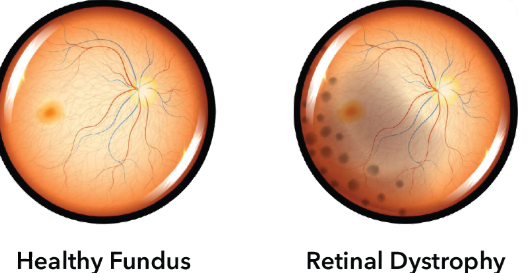
Retinal dystrophy, also called inherited retinal disease, describes conditions caused by faulty genes that gradually break down the light-sensing cells of the retina. Retinitis pigmentosa (RP) is the best known, which is why many people searching for retinitis pigmentosa treatment are really asking about the wider group.
Each type affects vision differently. Some start with night blindness and loss of side vision, others with loss of central vision and colour. Knowing exactly which type and which gene is involved decides what treatment, if any, applies to you.
The pattern of vision loss depends on the type.
No single test tells the whole story. A retina specialist usually combines several.
Which of these apply depends on your type, gene and eye health.
Voretigene neparvovec (Luxturna) is approved for retinal dystrophy caused by confirmed biallelic RPE65 mutations. It only applies after genetic testing confirms this subtype.
Studies suggest modestly slower progression in certain adults with retinitis pigmentosa. It needs specialist supervision, and it is not advised for every type, including Stargardt disease.
Cataracts develop earlier in many retinal dystrophies, and removing them can improve remaining vision.
Medication can sometimes reduce swelling that affects central vision.
Good support makes daily life easier at every stage.
Magnifiers, high-contrast lighting, screen readers and adaptive technology.
Skills for moving confidently with reduced side vision.
Explains inheritance patterns and risk for family planning.
Tracks progression, catches treatable complications early and keeps you informed about new trials.
Eye Stem Cell Center brings together pioneers in stem cell biotechnology and highly experienced ophthalmologists to provide advanced regenerative eye care with compassion and precision.
Dr. Pallavi is renowned for her expertise in cataract and corneal surgeries. With thousands of successful procedures, she combines surgical precision with a patient‑first approach.
Get ConsultationDr. Robin specializes in advanced cataract surgery, refractive procedures, and keratoconus treatment. His clinical excellence ensures patients receive world‑class eye care.
Get ConsultationDr. Pawan is an expert in retinal disorders, diabetic retinopathy, and advanced retina procedures. His patient‑focused approach ensures precise treatment and long‑term vision care.
Get ConsultationNot yet for most types. One approved gene therapy exists for a specific, genetically confirmed subtype. Most care focuses on slowing progression where possible, treating complications and supporting daily life.
Retinitis pigmentosa is one type of retinal dystrophy. The term covers several inherited conditions, including Stargardt disease and cone-rod dystrophy.
It varies by type and gene, even within one family. Regular monitoring by a retina specialist is the most reliable way to track your own pattern.
Yes. It confirms the diagnosis, shows whether gene therapy could apply, helps find suitable clinical trials and informs your family.


