Have any question? Call Us Now?

Diabetic Retinopathy: Can Stem Cells Help Restore Vision? - Eye Stem Cell Center
September 14, 2026/ 0 comment
Diabetic Retinopathy: Can Stem Cells Help Restore Vision?
Medically reviewed by Dr. Prashant Tyagi (Stem Cell Biotechnology Specialist, 10+ years) and Dr. Pallavee Senior Consultant | Ophthalmologist & Eye Surgeon 22+ Years Experience
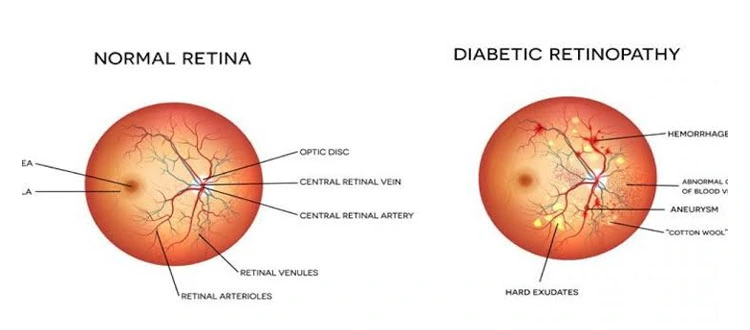
Diabetic retinopathy is one of the most common complications of long-standing diabetes and remains a leading cause of vision loss among working-age adults worldwide. As blood sugar levels stay elevated over time, the small blood vessels in the retina become damaged — leading first to subtle changes and, if untreated, to significant vision loss. With regenerative medicine advancing rapidly, many patients ask whether stem cells could help restore vision already lost to this condition.
Understanding How Diabetic Retinopathy Damages Vision
Diabetic retinopathy progresses in stages:
- Non-proliferative diabetic retinopathy (NPDR) – early stage, with weakened blood vessel walls causing small leaks and swelling
- Proliferative diabetic retinopathy (PDR) – advanced stage, where the retina, starved of oxygen, grows abnormal new blood vessels that can bleed, cause scarring, and lead to retinal detachment
- Diabetic macular edema (DME) – fluid buildup in the macula, which can occur at any stage and directly affects central vision
Where Stem Cell Research Stands
- Vascular repair research – some studies are exploring whether certain stem/progenitor cells could help repair damaged retinal blood vessels or promote healthier new vessel growth, rather than the abnormal, fragile vessels typical of PDR.
- Retinal cell replacement – early-stage research is exploring whether stem cell-derived retinal cells could replace photoreceptors or supporting cells damaged by advanced disease.
- Anti-inflammatory and protective approaches – mesenchymal stem cells are being studied for their potential to reduce the inflammatory processes that contribute to retinal damage in diabetes.
Importantly, this research is still largely in early and preclinical to early clinical trial stages. No stem cell therapy is currently an approved or standard treatment for restoring vision lost to diabetic retinopathy.
What Is Proven and Available Today
While stem cell approaches remain experimental, several treatments are well-established and effective when used at the right stage:
- Anti-VEGF injections – the standard treatment for diabetic macular edema and proliferative disease, reducing abnormal vessel growth and swelling
- Laser photocoagulation – used to treat proliferative retinopathy by reducing abnormal vessel growth
- Vitrectomy surgery – for advanced cases involving bleeding or retinal detachment
- Tight blood sugar and blood pressure control – the single most effective way to slow or prevent progression in the first place
Why Early Detection Matters More Than Any Future Treatment
Because diabetic retinopathy often has no symptoms in its early stages, regular screening is critical:
Annual dilated eye exams are recommended for all people with diabetes, even without visual symptoms.
Early-stage changes caught on screening can often be managed simply through better glucose control.
Waiting for symptoms to appear usually means the disease has already progressed significantly.
The Bottom Line
While stem cell research offers genuine hope for the future of diabetic retinopathy treatment — particularly for repairing damaged retinal tissue — it is not yet an available or proven option for restoring lost vision. The most effective path today combines rigorous diabetes management with regular eye screening and, when needed, established treatments like anti-VEGF therapy and laser treatment.
Medical & Government References
- National Eye Institute (NEI), NIH – Diabetic Retinopathy
- National Institute of Diabetes and Digestive and Kidney Diseases (NIDDK), NIH – Diabetes Eye Complications
Related Readings
Diabetic Retinopathy Treatment In India
Stargardt’s Disease in Young Adults: Understanding an Under-Diagnosed Condition
