Have any question? Call Us Now?

Stem Cell Treatment for Retinitis Pigmentosa: What Research Shows, What Is Still Unproven, and How to Choose Wisely - Eye Stem Cell Center
October 13, 2026/ 0 comment
Stem Cell Treatment for Retinitis Pigmentosa: What Research Shows, What Is Still Unproven, and How to Choose Wisely
Last updated: 13 October 2026 | Author: Prashant Tyagi (Stem Cell Biotechnology Specialist, 10+ years) and Dr. Pallavee Senior Consultant | Ophthalmologist & Eye Surgeon 22+ Years Experience
A diagnosis of retinitis pigmentosa (RP) is hard to hear, and many families quickly search for stem cell treatment for retinitis pigmentosa. This guide explains what RP is, what is established, what research is exploring, and how to judge any treatment offer carefully. It does not promise a cure, because none is currently proven for most people with RP.
Quick Navigation
- What retinitis pigmentosa is
- Established care and options today
- What stem cell research is exploring
- Established vs investigational
- Who may be considered
- What a patient journey looks like
- Risks and limits
- Questions to ask any provider
What Retinitis Pigmentosa Is
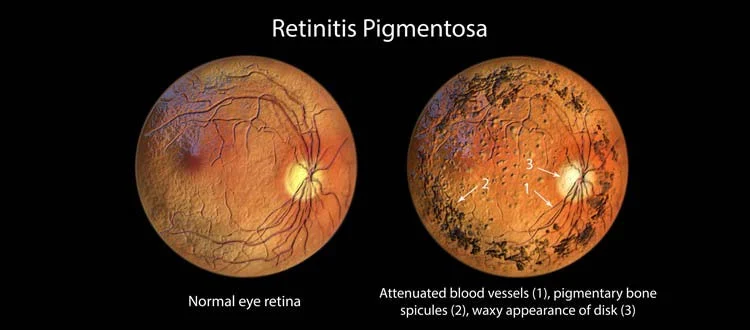
RP is a group of inherited conditions in which the light-sensing cells of the retina, first the rods and later the cones, gradually lose function. Common early signs are poor night vision and narrowing of the side vision, which can progress over years. The pattern and speed differ between people and between genes. Related conditions include rod and cone dystrophy, Usher syndrome and Leber congenital amaurosis. You can read about the condition on our retinitis pigmentosa page.
Established Care and Options Today
- Regular specialist follow-up with a retina specialist to track vision and complications.
- Treating complications such as cataract or swelling at the macula, when they occur.
- Genetic testing and counselling to identify the gene involved, which helps with family planning and with eligibility for gene-specific treatments or trials.
- Gene therapy for a specific gene: one gene therapy has been approved in some countries for people with confirmed biallelic RPE65 mutations. It applies to a small share of patients, and availability depends on the country.
- Low-vision aids and rehabilitation to make daily life safer and easier.
What Stem Cell Research Is Exploring
Researchers are studying several ideas: cells that might support or protect remaining retinal cells through signalling, and cells that might replace damaged retinal tissue. Most of this work is at the trial stage. Results so far suggest that some approaches may be safe in selected patients, but benefit for vision has not been established as routine treatment and long-term outcomes are still being studied. Treatment offered outside registered research should be seen as investigational.
Established vs Investigational
| Approach | Status | What to know |
|---|---|---|
| Specialist monitoring, low-vision support | Standard care | Helps manage function and complications |
| Gene-specific therapy (confirmed RPE65 disease) | Approved in some countries for a narrow group | Needs genetic confirmation and specialist centre |
| Stem cell-based approaches | Investigational | Benefit not established; should follow ethics and regulatory rules |
| Retinal implants | Limited, for advanced vision loss | Availability is restricted |
Who May Be Considered
Suitability depends on the stage of disease, the remaining retinal tissue, other eye conditions and overall health. People with some remaining retinal function are generally discussed differently from those with very advanced loss. An eye specialist should review your reports and tell you honestly whether any option is appropriate. You can upload your reports for a review.
What a Patient Journey Looks Like
- Report review: eye examination reports, field of vision tests, imaging and genetic reports where available.
- Counselling: goals, possible benefit, risks and limits are explained, along with a written estimate.
- Procedure and monitoring: carried out as per the protocol by qualified specialists.
- Follow-up: regular review to record any changes. Our article on the patient journey before, during and after treatment describes this in more detail.
Patients from other countries can read about medical tourism and our retinitis pigmentosa treatment in India page.
Risks and Limits
Any eye procedure carries risks, such as infection, bleeding, inflammation, raised eye pressure or retinal detachment. With investigational treatments, the main limit is uncertainty: vision may stay the same, improve slightly or continue to decline. Stem cell therapy is not an FDA-approved treatment for RP, and no provider can guarantee a result. Vision changes reported by individual patients cannot be assumed to apply to you.
Questions to Ask Any Provider
- Is this offered as part of a registered trial or as an investigational service, and under which approvals?
- Which cells are used and where are they prepared?
- What results have been documented, and how were they measured?
- What are the risks, and who manages complications?
- Is the cost itemised in writing?
- Does my own retina specialist know about this plan?
Learn More
Explore other conditions we see on our pages for optic nerve atrophy and Stargardt’s or macular dystrophy, read more on our blog, or contact the Eye Stem Cell Center to speak with the team.
More Official Sources
- National Eye Institute (NEI)
- American Academy of Ophthalmology (AAO)
- ClinicalTrials.gov
- Clinical Trials Registry – India (CTRI)
- Indian Council of Medical Research (ICMR)
- Central Drugs Standard Control Organisation (CDSCO)
Related Readings
Stem Cell Therapy for Diabetic Retinopathy: A New Approach to Protecting Vision
