Have any question? Call Us Now?

Usher Syndrome and Retinitis Pigmentosa: Understanding the Connection
September 10, 2026/ 0 comment
Usher Syndrome and Retinitis Pigmentosa: Understanding the Connection
Medically reviewed by Dr. Prashant Tyagi (Stem Cell Biotechnology Specialist, 10+ years) and Dr. Pallavee Senior Consultant | Ophthalmologist & Eye Surgeon 22+ Years Experience
If your child or a family member has been diagnosed with Usher syndrome, you may have also come across the term “retinitis pigmentosa” (RP) in the same conversation. These two conditions are closely linked — understanding the connection can help families make sense of the diagnosis and know what to expect.
What Is Usher Syndrome?
Usher syndrome is a genetic condition that causes a combination of hearing loss (or deafness) and progressive vision loss. It’s one of the most common causes of combined deafness and blindness worldwide. Usher syndrome is inherited in an autosomal recessive pattern, meaning a child must inherit an altered gene copy from both parents to be affected.
There are three main types, which differ mainly in the severity and timing of hearing loss and onset of vision problems:
- Type 1 – profound hearing loss from birth, balance problems, and RP symptoms typically beginning in early childhood
- Type 2 – moderate to severe hearing loss from birth (often aided with hearing aids), normal balance, and RP symptoms usually appearing in the teenage years
- Type 3 – progressive hearing loss (not always present at birth), variable balance issues, and variable onset of RP
The Retinitis Pigmentosa Connection
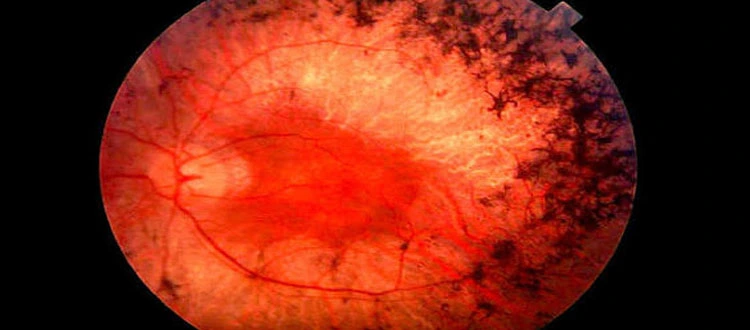
The vision loss experienced in Usher syndrome is retinitis pigmentosa — it’s not a separate eye condition but rather the specific form RP takes when caused by Usher-related gene mutations. RP causes progressive degeneration of the retina’s photoreceptor cells (rods and cones), typically beginning with:
- Night blindness – difficulty seeing in low light, often the earliest sign
- Peripheral vision loss – gradually narrowing the visual field (“tunnel vision”)
- Later-stage central vision loss in more advanced cases
In Usher syndrome, this RP process is caused by mutations in genes also involved in inner ear function — which is precisely why hearing and vision are affected together. Genes such as MYO7A, USH2A, and CDH23 are among those most commonly implicated.
Why the Genetic Link Matters
Because Usher syndrome and its associated RP share a genetic root cause, genetic testing plays an important role:
- Confirming the specific gene and mutation type helps predict likely disease progression and guides monitoring
- It informs genetic counseling for siblings and future family planning
- It determines eligibility for gene-specific clinical trials, including some emerging gene therapy approaches targeting particular Usher-related mutations
Living with Usher Syndrome: A Team Approach
Because Usher syndrome affects both hearing and vision, coordinated care makes a significant difference:
- Audiology support – hearing aids or cochlear implants, often most effective when started early
- Low-vision rehabilitation – orientation and mobility training, especially important as peripheral vision narrows
- Educational support – specialized programs for children who are deaf-blind or have combined sensory loss
- Regular ophthalmologic monitoring to track RP progression
- Genetic counseling for the whole family
The Bottom Line
Retinitis pigmentosa isn’t a separate complication of Usher syndrome — it’s the specific way vision loss manifests as part of the same underlying genetic condition. Understanding this connection helps families anticipate what to expect and seek the right combination of audiology, ophthalmology, and genetic counseling support early on.
Medical & Government References
NIH – Genetic and Rare Diseases Information Center (GARD) – Usher Syndrome
Related Readings
Usher Syndrome Induced Retinitis Pigmentosa – Treatment with Stem Cells
