Have any question? Call Us Now?

Stargardt’s Disease (Macular Dystrophy): Causes, Symptoms, Diagnosis, and Treatment Options
July 05, 2026/ 0 comment
Stargardt’s Disease (Macular Dystrophy):, Symptoms, Diagnosis, and Treatment Causes Options
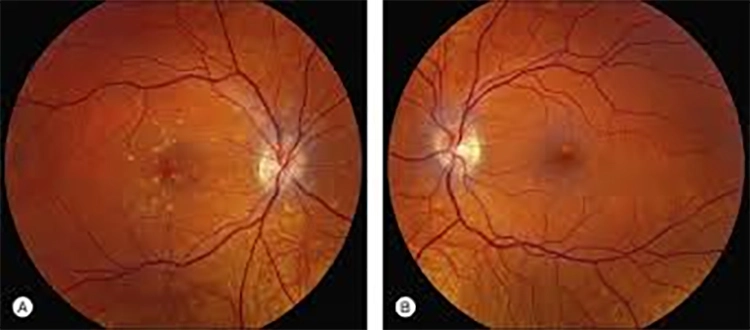
Stargardt’s Disease, commonly known as Stargardt’s Macular Dystrophy, is a rare inherited retinal disorder that primarily affects the macula—the central part of the retina responsible for sharp, detailed vision. The condition usually develops during childhood, adolescence, or early adulthood and gradually leads to a decline in central vision. While peripheral (side) vision often remains intact, activities such as reading, driving, recognizing faces, and seeing fine details can become increasingly difficult.
Although there is currently no definitive cure for Stargardt’s Disease, advances in retinal imaging, genetic research, and regenerative medicine are improving diagnosis, patient care, and the development of future treatment options.
What Is Stargardt’s Disease?
Stargardt’s Disease is an inherited form of macular degeneration caused by genetic mutations that affect the normal function of retinal cells. In most cases, mutations in the ABCA4 gene prevent the retina from properly removing waste products, leading to the accumulation of fatty deposits known as lipofuscin. Over time, these deposits damage the light-sensitive photoreceptor cells in the macula, resulting in progressive vision loss.
Unlike age-related macular degeneration (AMD), Stargardt’s Disease often appears much earlier in life and has a genetic origin.
Symptoms of Stargardt’s Disease
The symptoms vary from person to person but commonly include:
- Gradual loss of central vision
- Blurred or distorted vision
- Difficulty reading small print
- Trouble recognizing faces
- Reduced color vision
- Increased sensitivity to bright light
- Slow adaptation when moving between light and dark environments
- Dark or gray spots in the center of vision
The progression of vision loss differs among individuals, and some patients retain useful vision for many years.
Causes and Risk Factors
Stargardt’s Disease is primarily caused by inherited genetic mutations, most commonly involving the ABCA4 gene. The condition is usually inherited in an autosomal recessive pattern, meaning a child must inherit one altered gene from each parent to develop the disease.
Individuals with a family history of inherited retinal disorders may have an increased risk, making genetic counseling an important consideration.
Diagnosis
A thorough eye examination is essential for confirming the diagnosis. An ophthalmologist or retinal specialist may recommend:
- Comprehensive eye examination
- Dilated retinal evaluation
- Optical Coherence Tomography (OCT)
- Fundus Autofluorescence (FAF)
- Fundus photography
- Visual field testing
- Electroretinography (ERG) when required
- Genetic testing to identify inherited retinal mutations
Early diagnosis allows patients to receive appropriate monitoring, genetic counseling, and supportive care.
Treatment Options for Stargardt’s Disease
At present, there is no proven cure for Stargardt’s Disease. Treatment focuses on preserving remaining vision, improving quality of life, and helping patients adapt to visual impairment.
Management may include:
- Regular retinal examinations
- Low vision rehabilitation
- Prescription visual aids and magnification devices
- Lifestyle guidance to support eye health
- Educational support for children and young adults
- Genetic counseling for affected families
Researchers around the world are investigating promising therapies for inherited retinal diseases, including gene therapy, stem cell therapy, and other regenerative medicine approaches.
Stem cell therapy is being studied for its potential to support damaged retinal tissues and promote retinal regeneration. However, it remains an evolving area of medical research and is not currently considered a standard or guaranteed treatment for Stargardt’s Disease. Patients interested in advanced therapies should consult experienced retinal specialists for individualized evaluation and guidance.
Living with Stargardt’s Disease
Although Stargardt’s Disease is progressive, many individuals continue to lead active and independent lives with appropriate support. Modern low vision technologies, assistive devices, educational accommodations, and regular follow-up care can significantly improve daily functioning and quality of life.
As research continues to advance, new therapies may provide additional treatment possibilities for inherited retinal disorders in the future.
Disclaimer: This article is intended for educational purposes only and should not replace professional medical advice. Every patient is unique, and treatment decisions should always be made after consultation with a qualified ophthalmologist or retinal specialist.
Frequently Asked Questions (FAQs)
- What is Stargardt’s Disease?
Stargardt’s Disease is a hereditary retinal disorder that damages the macula, causing progressive loss of central vision.
- Is Stargardt’s Disease the same as age-related macular degeneration?
No. Although both affect the macula, Stargardt’s Disease is an inherited condition that usually develops at a younger age, whereas age-related macular degeneration typically affects older adults.
- Can Stargardt’s Disease be cured?
Currently, there is no complete cure. Treatment focuses on monitoring the condition, maximizing remaining vision, and improving quality of life.
- Is stem cell therapy available for Stargardt’s Disease?
Stem cell therapy is being researched as a potential regenerative treatment for inherited retinal diseases. It remains experimental and should only be considered after consultation with qualified specialists.
- Why is genetic testing recommended?
Genetic testing helps confirm the diagnosis, identify the responsible gene mutation, guide family counseling, and determine eligibility for future research or clinical trials.
