Have any question? Call Us Now?

What is Stargardt Disease? Stargardt Treatment with Stem Cell
October 28, 2025/ 0 comment
What is Stargardt Disease? Stargardt Treatment with Stem Cell
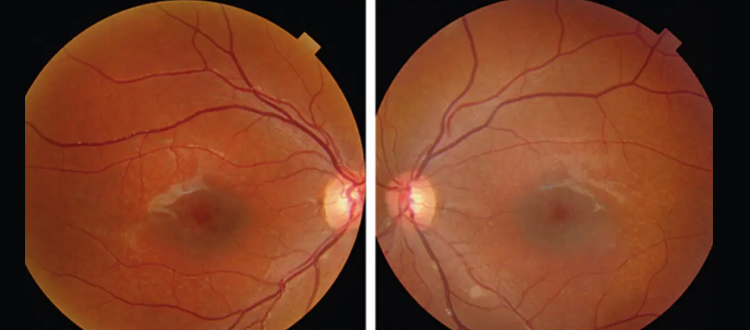
The macula is responsible for clear central vision needed to type and read. Gradually, the sight in the middle becomes worse and worse, usually from an early age (childhood or adolescence). Unlike other forms of the disease, Stargardt is caused by mutations in a gene called ABCA4 that creates fatty deposits known as lipofuscin under the level of the retina. The accumulation damages light-sensing cells and gradually steals people’s central vision. While some peripheral vision is often retained, the loss of central vision can make daily tasks such as reading, driving and recognising faces difficult or impossible.
Why You Have so Few Options for Traditional Treatments ?
Current treatments for Stargardt’s disease aim to treat symptoms and delay progression of the disease. This typically involves the use of low-vision aids, avoiding UV light exposure and not overdosing on vitamin A. But they do not treat the cause — death of retinal cells. This limitation has created an interest among scientists and physicians in using more advanced regenerative treatment methods like stem cell therapy that might one-day help protect or restore sight.
What is Stem Cell Therapy for Stargardt Disease?
Stem cell therapy is the delivery of healthy, specialised cells into the damaged retina. These cells can assist in:
- Regenerate retinal pigment epithelial (RPE) cells, replacing the damaged ones.
- Photoreceptors are protected by a healthier retinal environment.
- Decelerate disease progression by enhancing cell function and tissue support.
- Help the visual function better, according to the disease stage.
The objective is to recover or preserve as much vision as possible by treating the underlying degeneration, not just by alleviating its symptoms.
Sources of Stem Cells
Several varieties of stem cells are under investigation in clinical trials for Stargardt disease, such as:
- Human embryonic stem cells (hESCs): They can differentiate into retinal cells.
- Induced pluripotent stem cells (iPSCs): Reprogrammed cells derived from the patient reducing the risk of rejection.
- Mesenchymal stem cells (MSCs): Possessing anti-inflammatory properties, these cells have a protective effect on the dying retinal cells in the eye.
The goal of each of these strategies is to offer the retina with some degree of physical support, and possibly even to enhance visual outcomes, eg, by increasing the diffusion distance for oxygen.
Potential Benefits and Considerations
Stem cell therapy for Stargardt disease is still being developed as a therapy, but preliminary studies suggest it may help to improve vision or prevent further vision loss. Some possible positive outcomes could be:
- Better central vision preservation
- Slow down retinal damage progression
- Decrease inflammation in the retina
- Enhanced quality of life
Note that individual results may vary, and patients should be thoroughly evaluated by a physician to determine eligibility.
Continuing investigations and prospects
As researchers continue to improve stem cell-based strategies to treat more safely, effectively, and broadly accessible. Clinical studies are underway on a global scale to obtain information about long-term safety, visual enhancement and patient outcomes. With advancements in technology and methodology, stem cell therapy has the promise to change how Stargardt disease is treated in the future.
For more information on cutting-edge eye care and treatment options, please visit Eye Stem Cell Center .
